Fieldwork in the Maldives
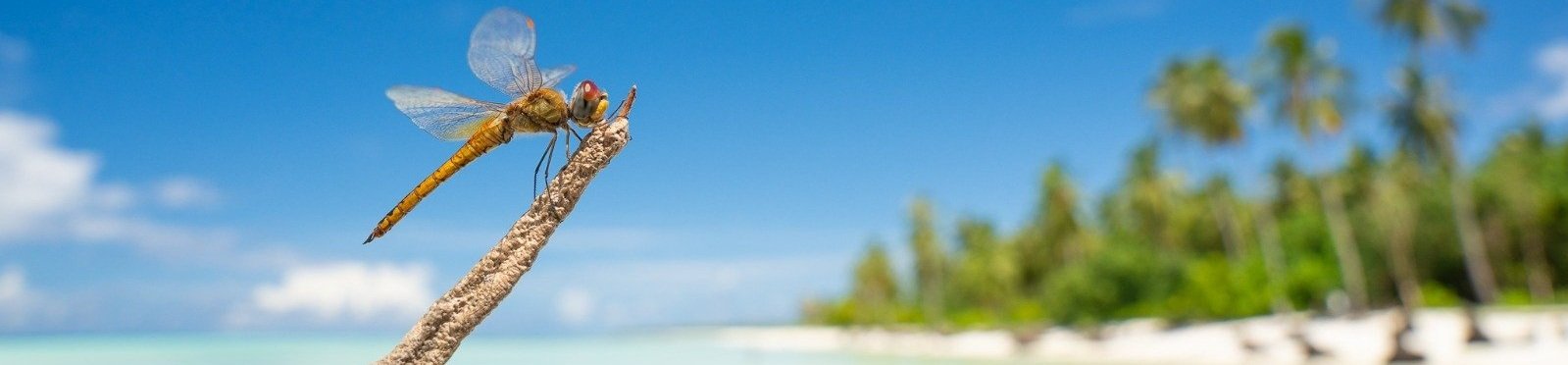
Photo: Will Hawkes
The Maldives is sinking
Of all the countries on Earth, the Maldives lies the lowest, not below sea level, but with an average land elevation of just ~1.5 metres above the sea surrounding it.
This can be compared to for example the UK, which has an average land elevation of 162 meters or Sweden, with 320 meters - even the Netherlands is on average 30 meters above the sea. With global warming causing glaciers and ice to melt, sea levels are rising worldwide. Every year, coastal erosion eats away at the sandy atolls in the Indian Ocean, and Maldivian land is lost to the turquoise sea.
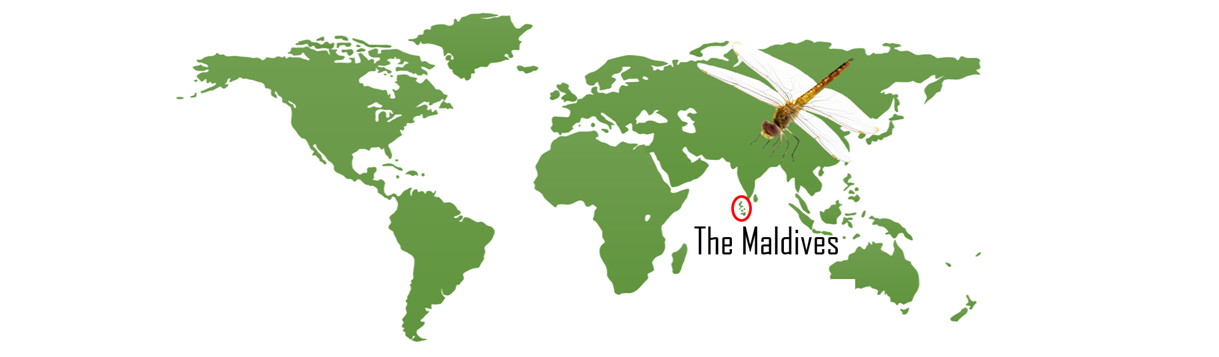
Counterintuitivly, however, the island nation actually gains more ‘land’ every year than it looses, as development on popular tourist islands and the at the capitol, Malé, builds and reclaims terrestrial territory.
During our pilot study on insect migration over the Indian Ocean, and over the Maldives, we saw many of the contradictions of this beautiful place.
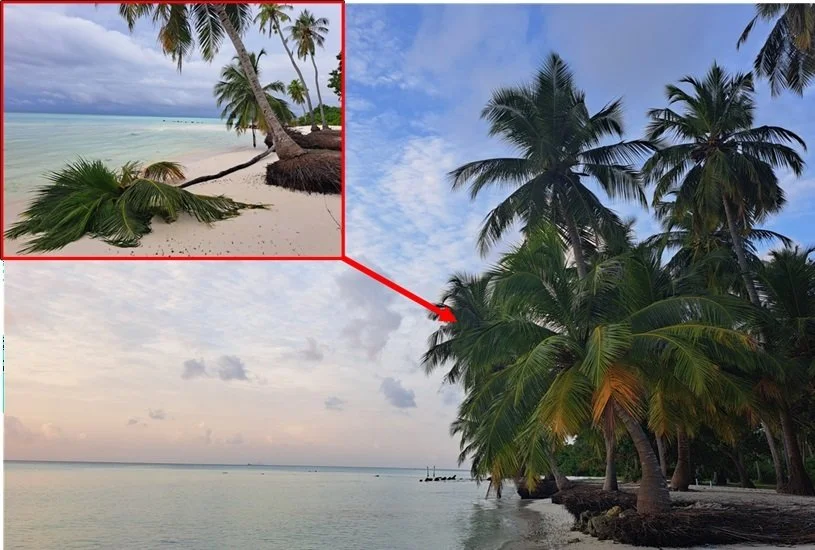
A coconut palm lost to sea. Both photos are taken during our three week stay at Gan, Laamu atoll in 2023. Photo: Johanna Hedlund
The Maldives is know for its extraordinary coral reefs, which are kaleidoscopes of colour, form and biodiversity. And of course, for its white sandy beaches and luxury resorts.
Many of the islands are however uninhabited, the location of coconut plantations and jungle, or the home of local Maldivians. There, alcohol is prohibited and many women wear very modest, muslim clothing. A stark contrast to influencers in bikini drinking cocktails (alcohol is permitted at sea and on privately owned islands).
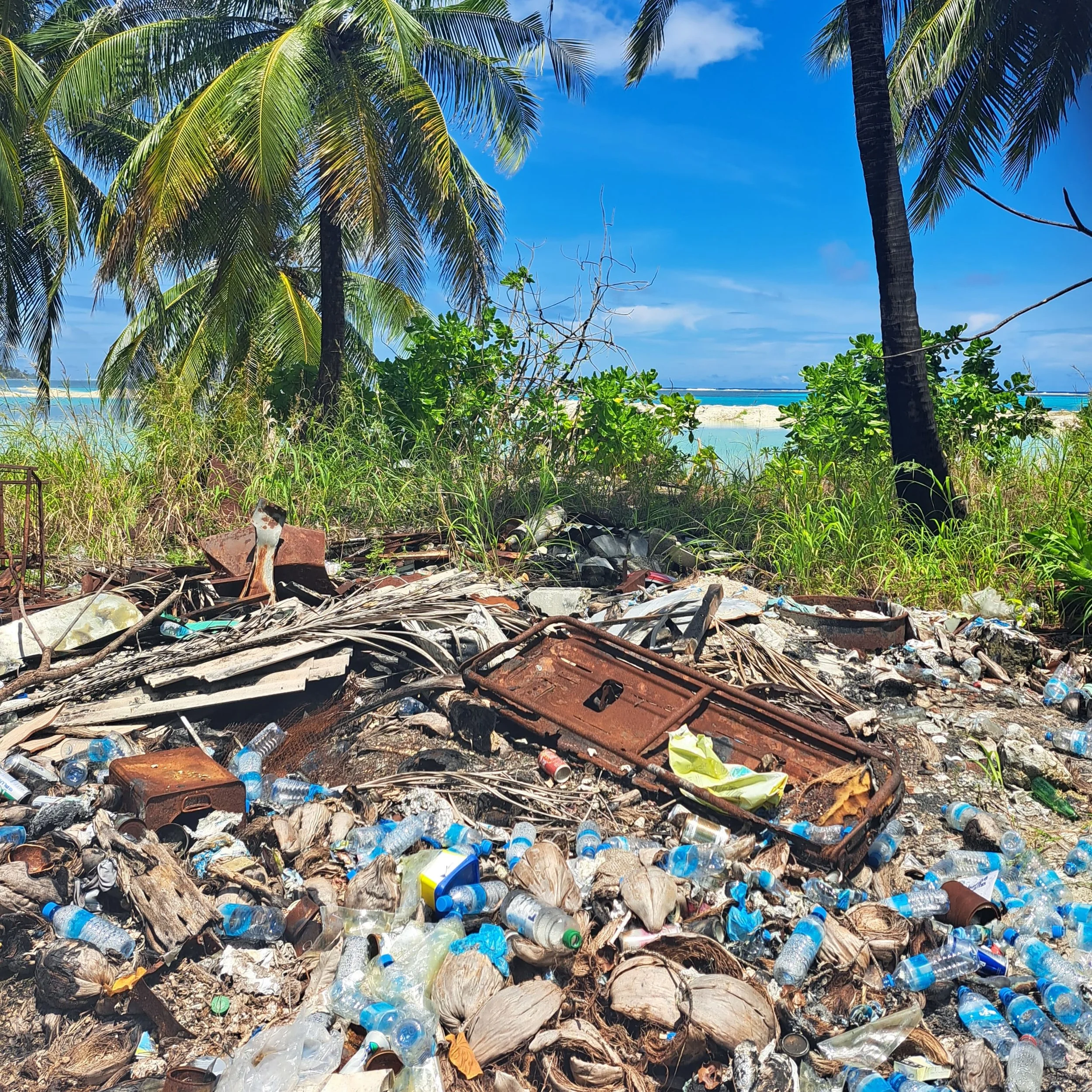
Litter is often washed ashore in the Maldives, and is also expensive to manage and remove. Where there are few tourists, it is often left piling up. Photo: Johanna Hedlund
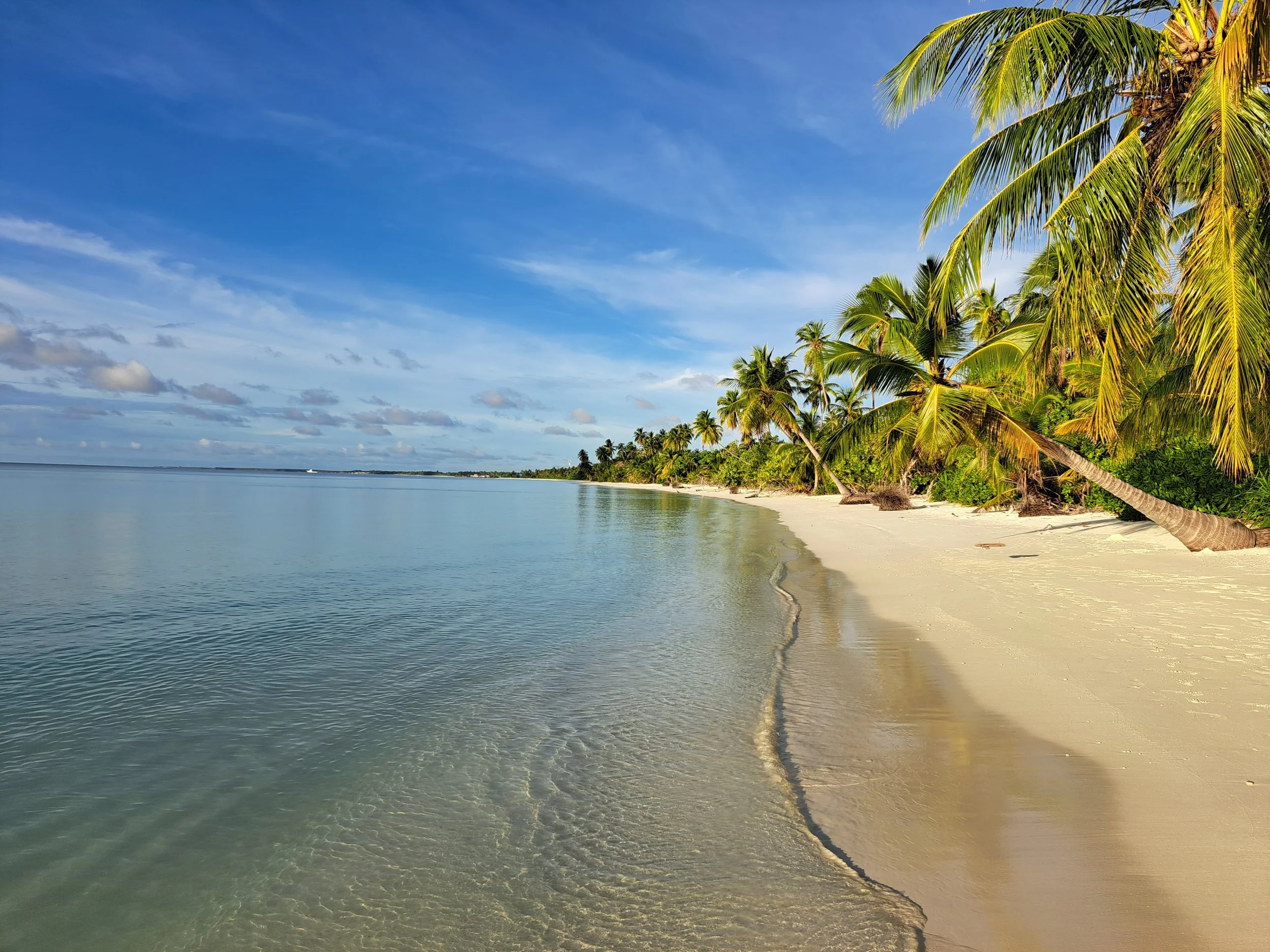
The beautiful White Bay at Gan, Laamu atoll. Photo: Johanna Hedlund
The terrestrial wildlife of the Maldives is less known, and to many that visits the islands, it probably appear restricted to crows (Corvus splendens) and flying foxes (Pteropus medius).
It would, however, be impossible to ignore the globe skimmer dragonfly swarms when they arrive in September-December (- although as spring is tourism high-season, most visitors do not get to see it).
These reddish-yellow dragonflies are obligate migrants and stay on the wing all day, rarely landing, and often hunt for small insect prey at 2-4 meter above the ground, thus being very visible. They arrive from India, from the northeast and maybe beyond, and they do not stay on the Maldives, but leave suddenly. They are thought to cross the daunting 3000 km of open ocean to reach Africa, where their monsoonal rainpool breeding grounds are about to fill up with seasonal rainfall.
But is it only globe skimmer dragonflies that arrive? Are they riding the ocean air highway winds alone, or are they just the conspicuous part of an even more massive translocation of species and biomass?
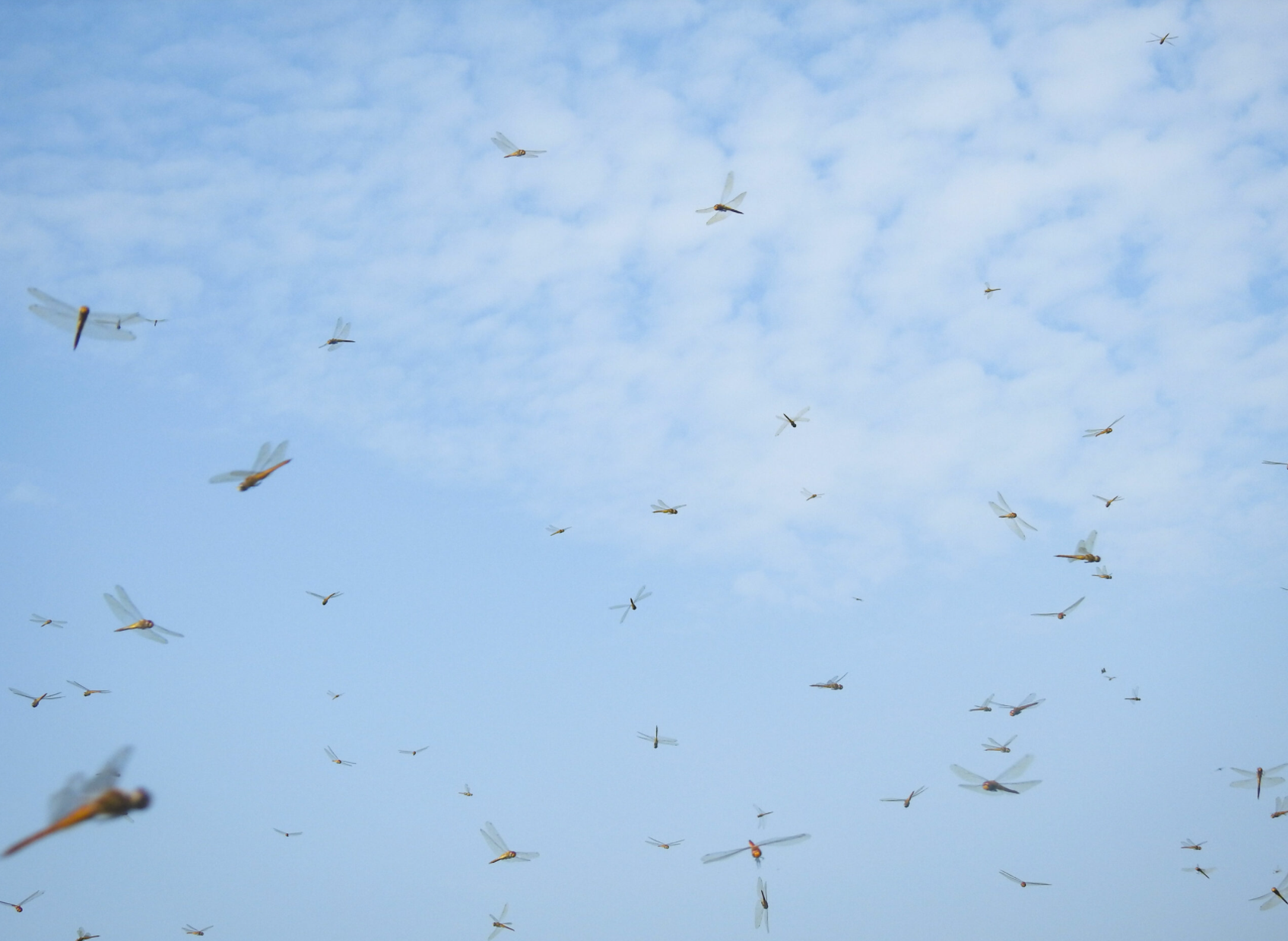
Globe skimmer swarm (Pantala flavescens). Photo: A. Vivek Shandran
TRansoceanic insect migration
The aim of our field work visit to the Maldives in 2023 was to answer whether insect migration over the Indian Ocean is restricted to the globe skimmer. We wanted to measure diversity and structure, i.e. how many species from how many insect orders may be represented, and which group make up the largest amount of migrants?
There are a few entomological studies performed on the islands, identifying for example butterflies, grasshoppers, cockroaches, termites and different pollinators. On the citizen science platform iNaturlist, 100 different species of butterflies and moths have been reported, and of these, about 30 species are potential migrants across the Indian Ocean. Interestingly, most of these are considered to be pests, causing damage to crops and human livelihood.
The cotton leaf-roller moth is one of these migratory pests, and it was one of the first insects we encountered on our debut field work day. It is small and light in colour, with beautiful dark patterns across its wings and legs.
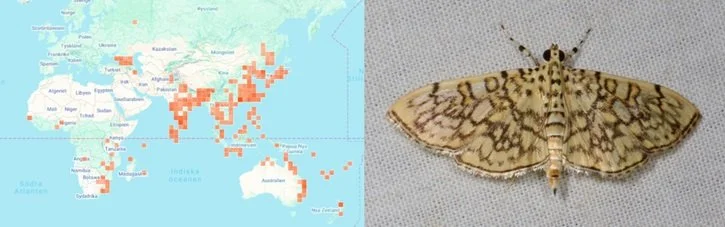
Cotton leaf-roller (Haritalodes obliqualis) observations on iNaturalist and photo (by Judy Gallagher under Creative Commons Attribution 2.0).
Across our three week long field visit, it became clear that certain species were very abundant. Cotton leaf-rollers were one of these species, along with blue and orange butterflies, white tree hoppers, and at least three species of dragonflies.
And mosquitoes. In the shade and in the evening, there were a lot of bothersome mosquitoes around.
One afternoon a swarm of green flies arrived across the sea.
There was definatly insect migration occuring!
We took several samples and these are now about to be analysed using stable isotope analysis, a method that can give a rough estimation of origin of an insect individual. This origin can then be compared to where it was encountered, which will give a clue to whether you have sampled a long-distance migrant or a local resident.
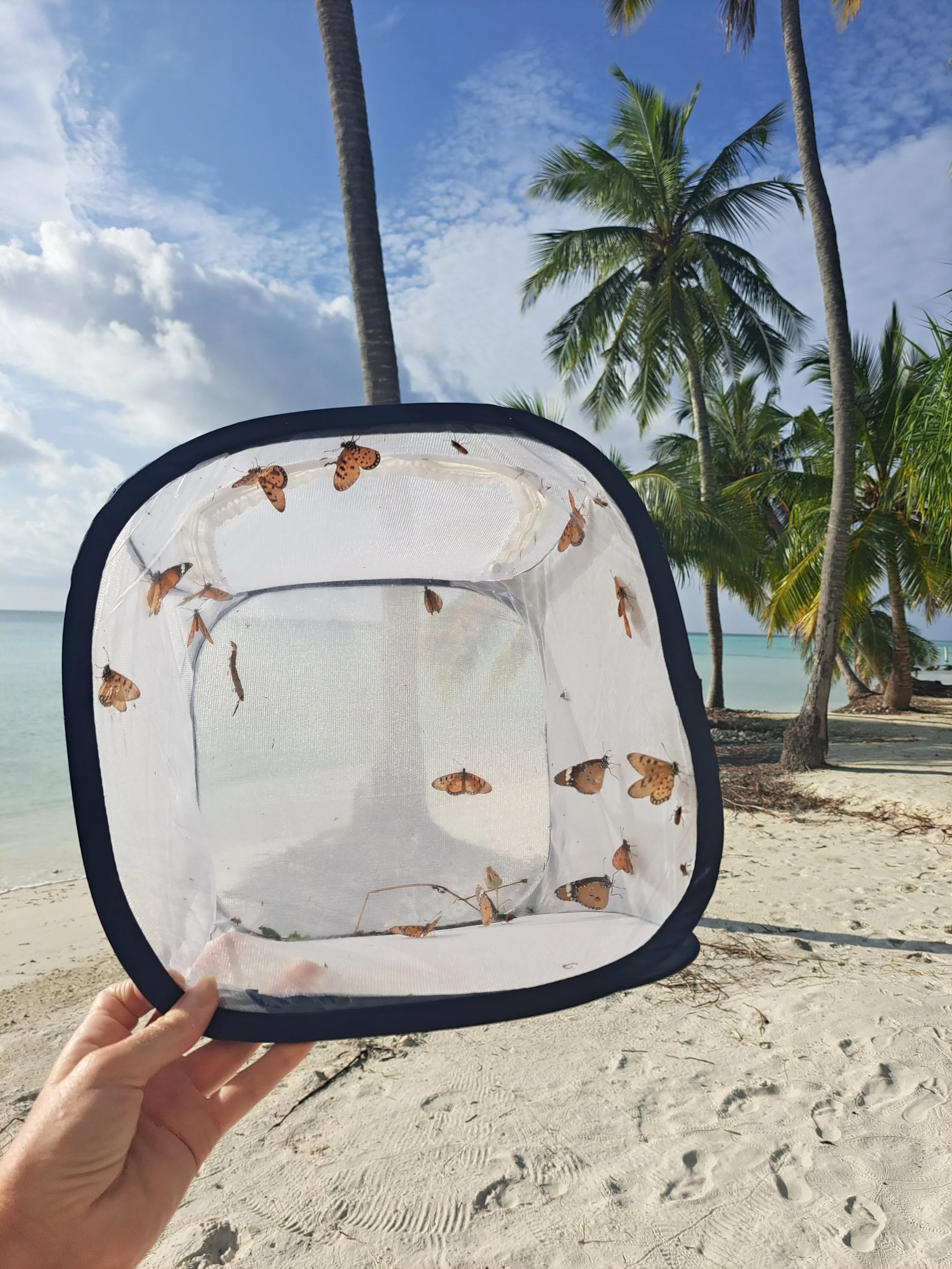
Tawny coasters (Acraea terpsicore) and plain tigers (Danaus chrysippus). Photo: Johanna Hedlund
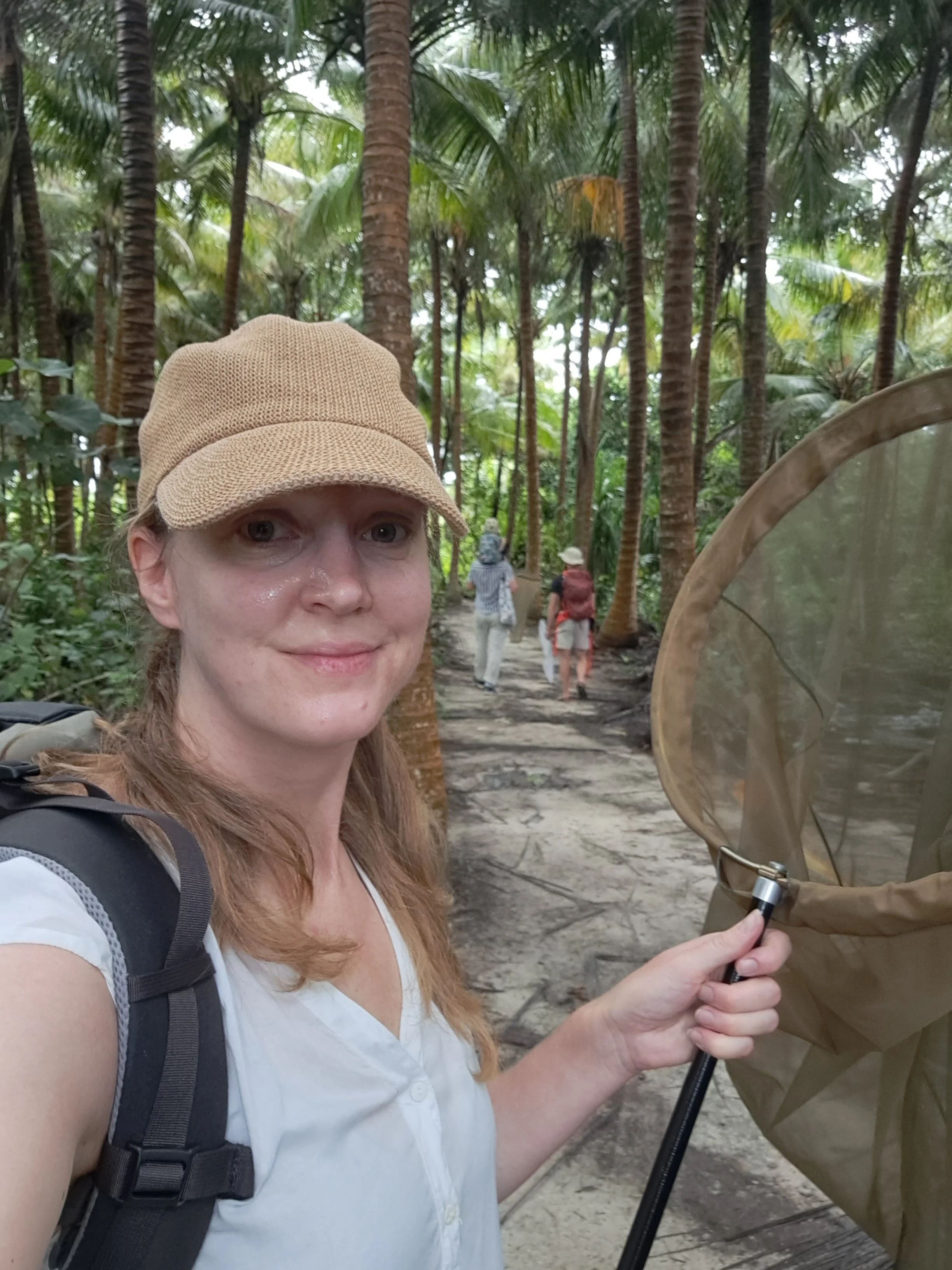
The PI with her three field assistants in the background - one is just 2.5 years old! Photo: Johanna Hedlund
Dragonriders
But not only is there the potential new discovery of a diverse trans-oceanic, trans-continental insect migration consisting of powerful fliers such as dragonflies and butterflies, and wind-riders such as treehoppers and flies…
There were also the parasitic stowaways.
Clutching hungerily to the wings of globe skimmers and voyaging gliders (Tramea limbata) were the midges. We first noticed them as they took off from the wings of the dragonflies we caught and held in our hand. It required some swift action to catch them as well, so that we could have a closer look at whatever the small black dots that escape-shuttled from their ceased motherships were…
And they were Forcipomyia midges.'
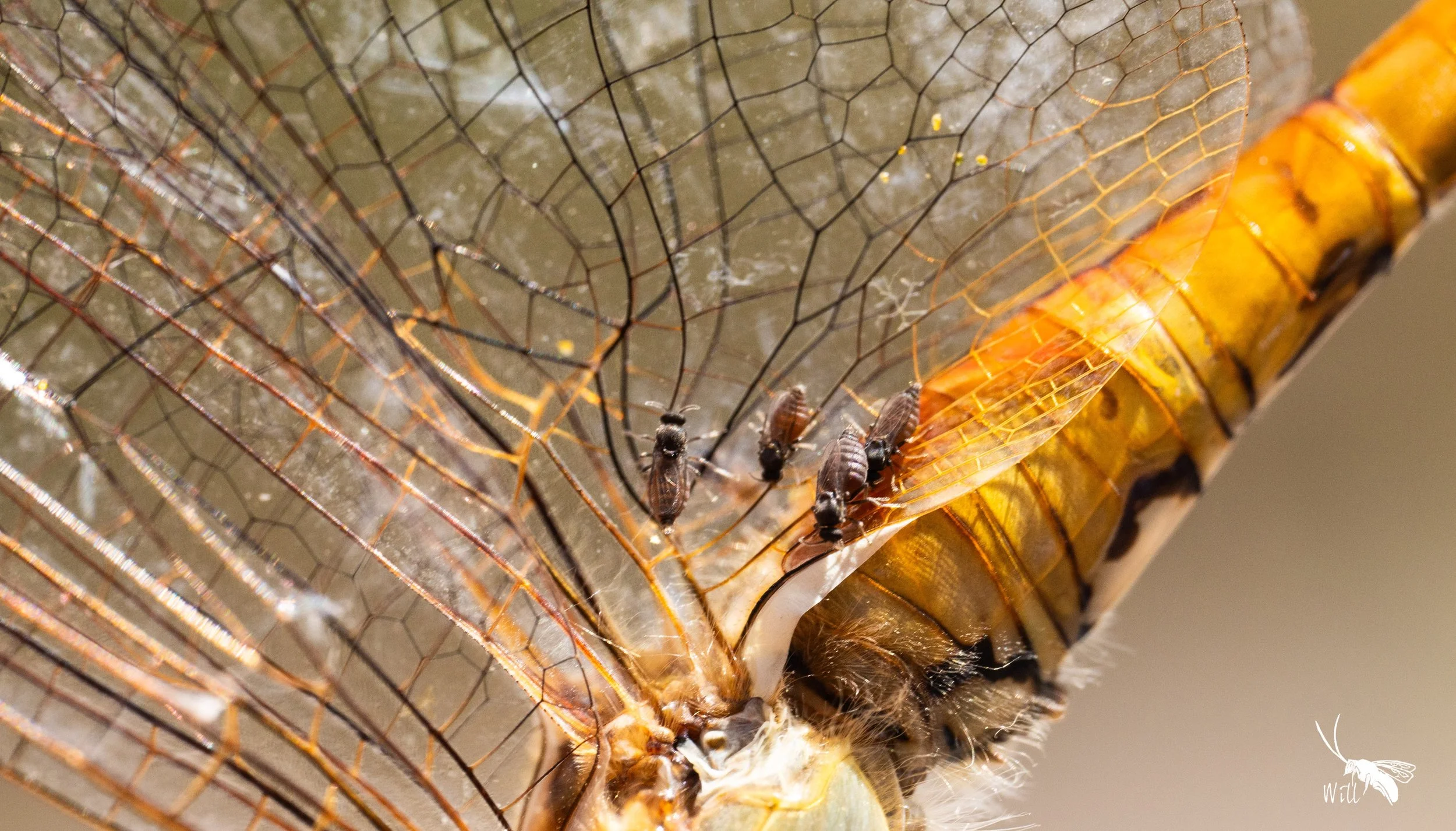
Globe skimmer with midges. Photo: Will Hawkes
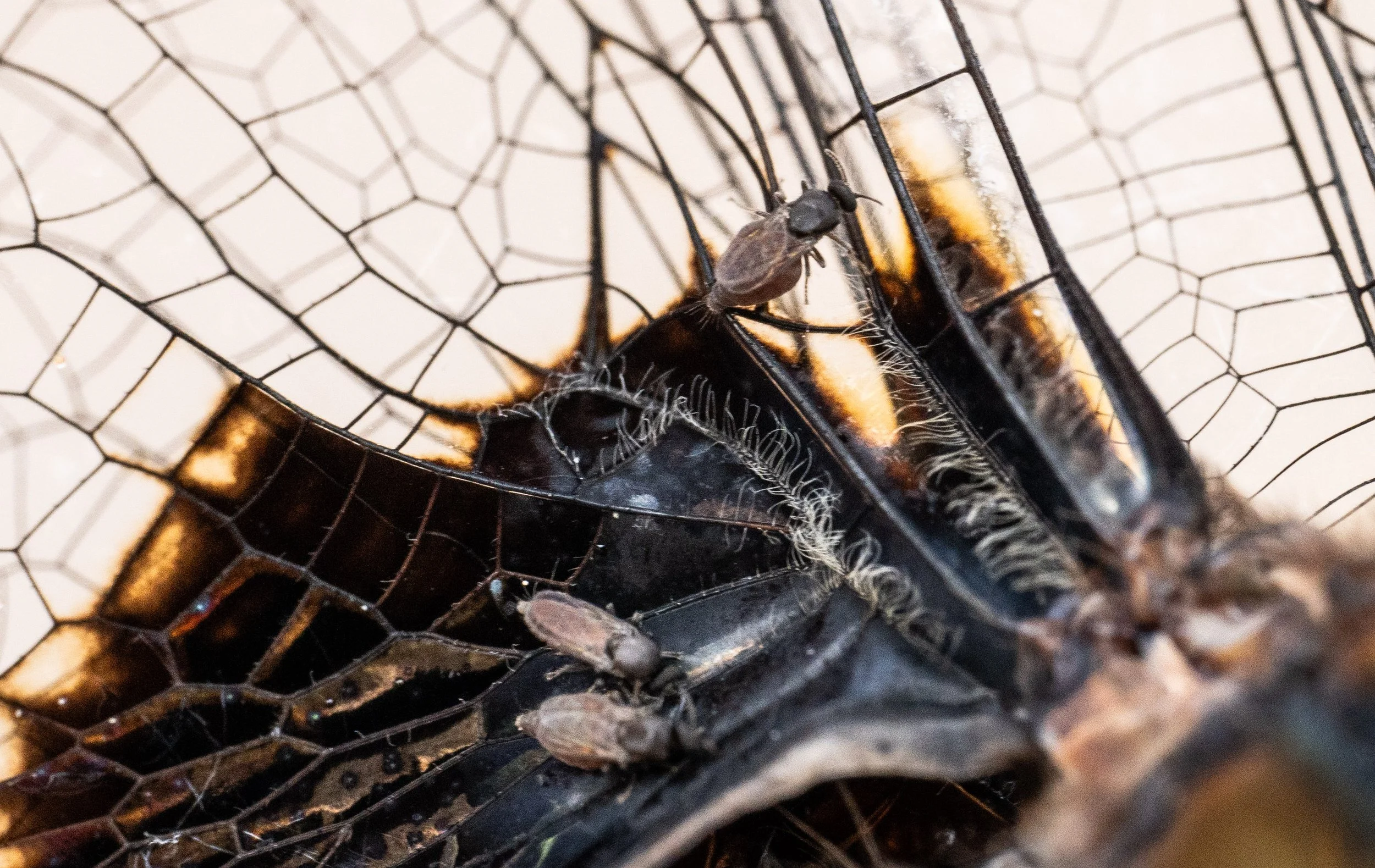
Voyaging glider with midges Photo: Will Hawkes
Here is a clip by field assistant extraordinaire, Dr Will Hawkes, where he talks about the midges that could have hitched a ride across the Indian Ocean.
You can see that the midges are bloated, full on dragonfly ‘blood’.
(However, insects do not have blood like mammals and birds, they have haemolymph. And unlike blood, haemolymph does not transport oxygen, that the insect recieves through little holes, tracea, in ther bodies. Instead, haemolymph transports nutrients through the body cavity in the insects, as insect do not have blood vessels either. The nutrient-rich haemolyph is thus a very good meal for a parasite like a Forcipomyia midge!)
The dragonriders, Forcipomyia, are a genus of biting midges that also include species that bite mammals or that pollinate. Species that attack and attach to dragonflies frequently aslo consume a lot of air as they suck the larger insects’s haemolymph, which causes them to ‘fart’ air bubbles from their abdomen. The highest ever recorded wing beat frequency was recorded on a Forcipomyia species in the 1950s. They are truely interesting little insects!
As of yet, the species found on the dragonflies on the Maldives have not been identified to species level, but we hope to be able to soon.
The Maldivian sky is very much as interesting as its turquoise sea and colourful reefs. And it is yet to reveal all of its secrets, stay tuned…