Going, going, gone
Extinction last forever
Extinction has been a part of Earth’s history from the creation of life.
The Permian Mass Extinction (potentially caused by volcanic eruptions over an aera the size of Australia that lasted for hundred thousands of years!) eradicated ~70% of all terrstrial life and ~95% of all marine life. But it cleared the way for the dinosaurs - who themselves were eradicated some 185 million years later.
During the Pleistocene, giant mammals disppaeared all over the globe as humans arrived to their continents…
Some extinct animals recieve a great deal of attention; the dinosaurs, the dront, the quagga, the mammut, the Tasmanian tiger… helpful attributes for acknowledgement include beauty, size and drama. Rare though, is the instances of famous, extinct insects
Considering the number of insect species of the world (1.5 million!) it is probably the group of animals that currently suffers the greatest amount of species loss.
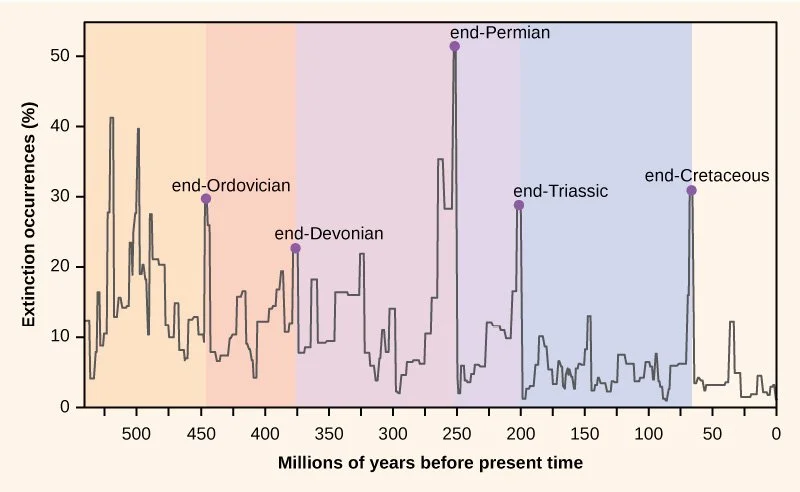
Mass-extinction events in Earth’s history by John W. Wilson
THe loss of a lepidopteran

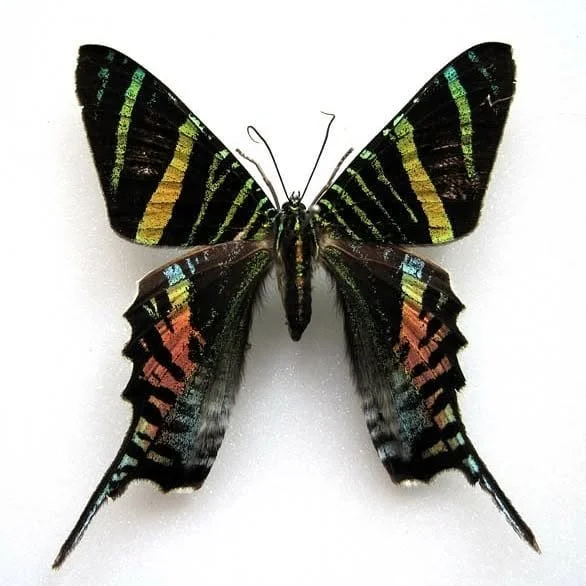
In July 2026, The Journal of Lost Species was launched by biology professor Matt Forister at the University of Nevada, Reno, USA. The emblem of this journal is the Jamaican sunset moth Urania sloanus, last seen alive in the late 1890s
The Jamaican sunset moth was an endemic to the island of Jamaica and a beautiful crepsecular moth resembeling a swallowtail butterfly. It was mainly active during sunset and sunrise.
It was roughly 6–8 cm across the wings, with long-tailed hindwings and black wings crossed by intensely iridescent green, blue, gold and reddish markings. Much of that brilliance was structural colour rather than ordinary pigment. Like other Urania, it was also chemically defended: larvae fed on toxic Omphalea plants and could sequester defensive compounds, so the conspicuous adult coloration probably had an aposematic component.
Naturalist Philip Henry Gosse gave wonderful eyewitness descriptions of the sunset moth, which was still commonly seen during his lifetime. He described adults appearing just before sunrise, initially singly and then in scores around flowering trees. He also saw individuals flying rapidly high above the forest canopy. Adults were most commonly reported from roughly March to July, but abundance was extraordinarily variable: some years produced conspicuous swarms, while in others the species was scarce
Why did it go extinct?
The standard answer is habitat loss, particularly destruction and fragmentation of lowland Jamaican forest and the associated Omphalea, for example O. triandra, Jamaican cubnut. However, as pointed out by Lees and Smith (1991), substantial Jamaican forest survived, and O. triandra itself apparently remained widespread, suggesting a more complicated story. It would appear as though this sunset moth may have been intrinsically vulnerable because it required a network of alternative host-plant populations. Habitat fragmentation could therefore destroy the connectivity between usable host patches without actually exterminating the host plant. Hurricanes, population fluctuations and ultimately small-population effects may then have compounded the problem.
Going, going, gone
When Gosse was reminiscing about the sight of swarms of sunset moths he had witnessed in Jamaica 35 years earlier, his words echoed of nostalgia, as though he knew, that then, in the year 1880, the species was already teetring on the brink of extinct. Ten years later, it was gone.
First, he paraphrased the popular poem ”Lalla Rookh” of Thomas Moore (1816):
”I ask, Is the nightingale singing there yet?
Are the roses still bright by the Bendemeer?”
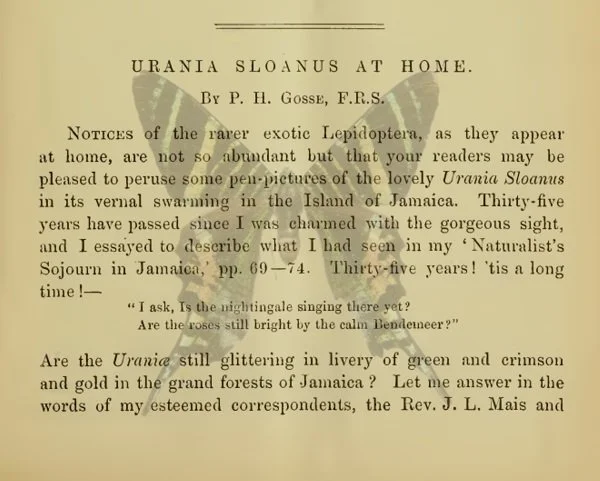
And then he ponders:
Are the Uraniae still glittering in livery of green and crimson and gold in the grand forests of Jamaica?
Sadly, the answer today, is no. Gosse’s inspiration, Lalla Rookh, answers him the same after the wistful ”I ask, Is the nightingale singing there yet? Are the roses still bright by the Bendemeer?”:
“-No, the roses soon wither'd that hung o'er the wave.
But some blossoms were gather'd, while freshly they shone,
And a dew was distill' d from their flowers, that gave
All the fragrance of summer, when summer was gone
Thus memory draws from delight, ere it dies,
An essence that breathes of it many a year;
Thus bright to my soul, as 'twas then to my eyes,
Is til at bower on the banks of the calm Bendemeer”
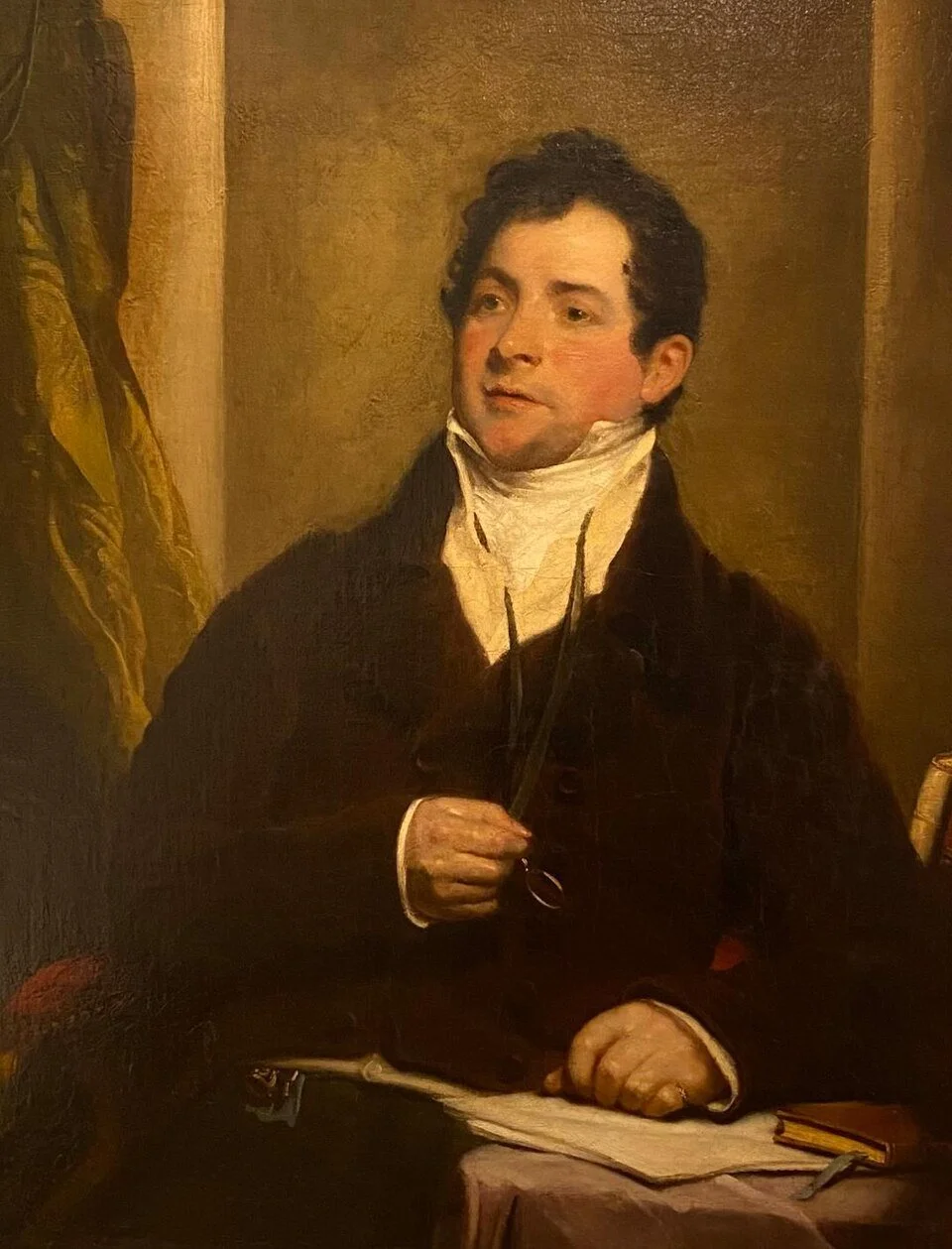
Thomas Moore 1817, National Gallery Dublin
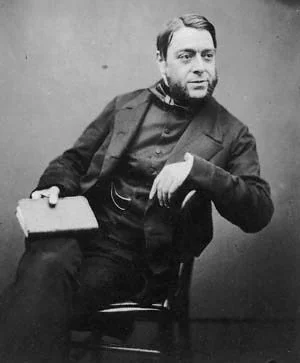
Philip Hhenry Gosse, 1855, Oxford Dictionary of National Biography
References and Resources
Gosse, P. H. (1880). Urania sloanus at home. The Entomologist, 13: 133–135
Lees, D. C. & Smith, N. G. (1991). Foodplant associations of the Uraniinae (Uraniidae) and their systematic, evolutionary, and ecological significance. Journal of the Lepidopterists’ Society, 45(4): 296–347
Wilson, John W., and Primack, Richard B. : "Conservation Biology in Sub-Saharan Africa", Chapter 8: "Extinction Is Forever", Open Book Publishers, Cambridge, UK, 2019, ISBN: 978-1-78374-751-1, pp. 257–296, here p. 258, Figure 8.1, DOI: https://doi.org/10.11647/OBP.0177, License: Creative Commons Attribution 4.0 International license (CC BY 4.0).
